
Greasy cabinet doors are one of those kitchen problems that sneaks up slowly. At first, you notice a small sticky spot near the stove. Then another one by the handle. Before long, the whole surface feels dull, tacky, and harder to clean than it should be.
The good news is that cleaning sticky grease off kitchen cabinets fast does not need harsh chemicals or endless scrubbing. In most homes, the best results come from simple tools, gentle cleaners, and a steady method. A soft cloth, warm water, dish soap, white vinegar, and baking soda can handle most buildup when used properly. For tougher grease, a mild store-bought degreaser, steam on the right surface, or a careful spot-clean with a special tool can help.
This guide is built for real kitchens, real mess, and real people who want the job done well. It gives you 7 easy ways to clean sticky grease off kitchen cabinets quickly, along with safety tips, finish care, and a simple routine to help keep grease from coming back. It also explains why each method works, so you can choose the right one for wood, painted, laminate, or sealed surfaces.
If your cabinets look like they have been through one too many fried chicken nights, this guide will help you bring them back without stress.
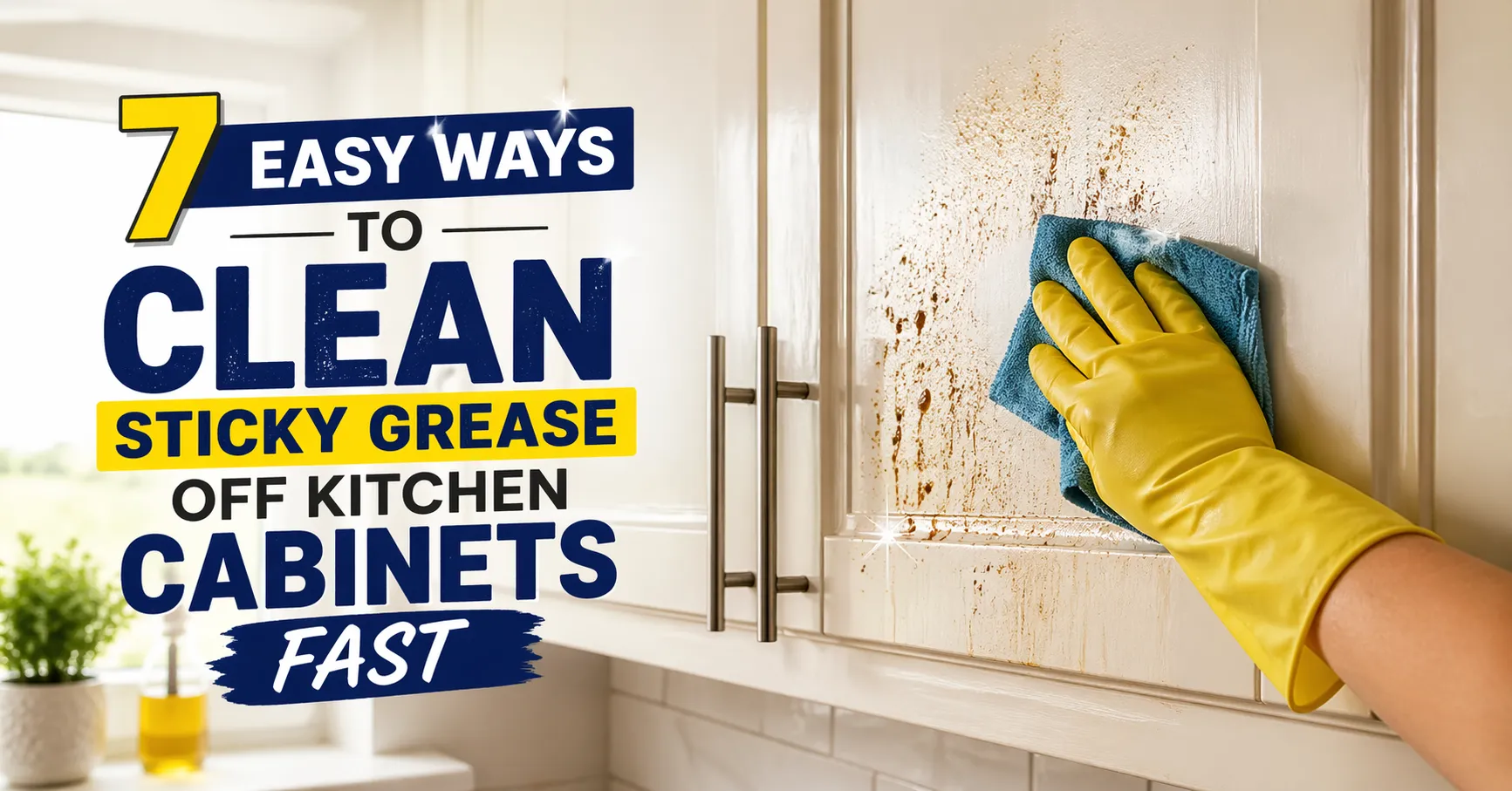
Kitchen grease does not arrive in one big splash. It builds up in tiny layers. Every time you cook, oil and steam move through the air. Tiny particles rise from pans, ovens, and stovetops. They settle on cabinet doors, handles, trim, and edges. Dust sticks to that film. Fingerprints add more grime. Over time, the surface turns sticky. This is why a cabinet that looks “just a little dirty” can suddenly feel almost glued. The grime is not only on top of the finish. It is mixed with dust and oil, which makes it harder to wipe away with plain water.
That is also why regular care matters. A quick wipe now and then keeps the buildup light. When grease sits for weeks or months, it becomes thick and stubborn. The longer it stays, the more likely you are to need deeper cleaning.
Here is the short version before we go deeper.
1. Dish soap and warm water for everyday grease.
2. White vinegar solution for sticky film and heavier spots.
3. Baking soda paste for stuck-on grime.
4. Combined DIY cleaners for cabinets that need extra help.
5. Commercial degreasers and wood-safe cleaners for tough buildup.
6. Steam cleaning for sealed wood only.
7. Special tools and careful hacks for corners, hardware, and problem spots.
Each method has a place. The trick is knowing which one to use first.
This is the simplest place to start, and in many kitchens, it is all you need.
Dish soap is made to break apart oil. That is why it works so well on cabinet grease. You do not need a strong mix. A few drops in warm water are enough.
Start with a soft cloth or microfiber cloth. Dip it into the soapy water, then wring it out well. The cloth should be damp, not dripping. Wipe one cabinet door at a time, using light pressure. If the grease is near the stove or handles, stay a little longer on those spots. Let the soap do most of the work.
Use a second cloth with clean water to wipe away residue. Then dry the surface right away with a clean towel or dry microfiber cloth.
This method is gentle enough for many finishes, including wood, painted cabinets, and laminate. It is also fast. For light buildup, one cabinet may take only a few minutes. For a whole row of upper cabinets, you can often finish in under an hour.
A few small habits make this method work better:
That last part matters more than people think. Grease may be the first problem, but too much water can become the second. If you want one safe starting point, this is it: dish soap and warm water.
When grease has more grip, white vinegar can help.
Vinegar works because it is acidic. That acidity helps loosen the oily film that soap alone may leave behind. It is a smart choice for sticky cabinet fronts, especially around the stove or sink. A simple mix of equal parts vinegar and water is usually enough.
You can spray the mix onto a cloth or apply it directly to the cabinet surface. If you spray it on the cabinet, do not soak the wood. Use a light mist, let it sit for a minute or two, and wipe it away with a clean cloth.
For stubborn grease, give the solution a little more time, but do not leave it sitting too long on delicate finishes. On wood, especially older wood, testing first is wise. A hidden corner or the back side of a door is a good place to check for changes in colour or finish.
Vinegar is useful, but it is not magic. It works best when the grime is oily, not crusted. If the cabinet still feels sticky after one pass, repeat the process instead of pressing harder.
A few things matter here:
On sealed surfaces, white vinegar is often a strong helper. On unfinished or delicate wood, use it with care.
If grease has turned into a thicker layer, baking soda can give you a little more cleaning power.Baking soda is mildly abrasive, which means it can lift grime without being as rough as a scouring pad. It also helps break down greasy residue when mixed into a paste.To make it, combine baking soda with a small amount of water until it becomes thick, almost like toothpaste. Apply the paste to the sticky area with a soft cloth, sponge, or old toothbrush. Let it sit for a few minutes. Then scrub gently and wipe clean with a damp cloth.
This method is especially useful for cabinet corners, trim, and the area around handles. Those spots collect grease fast because hands touch them all the time.Do not rub too hard. The goal is to lift the buildup, not scratch the surface. On painted cabinets, the paste can work very well. On unsealed or soft wood, it should be tested first.After cleaning, wipe away all paste residue. Then dry the cabinet well. Any leftover powder can leave the finish looking cloudy.
Use this when you need a little more bite, but still want a gentle method. Baking soda paste is a simple fix that many kitchens already have in the pantry.
Some cabinets need more than one helper at once.That is where combined DIY cleaners come in. You can pair dish soap with vinegar, or use baking soda with soap, depending on the mess. These mixes are helpful when the grease is older, thicker, or spread across a larger area.
One useful method is to start with dish soap and warm water, then follow with a light white vinegar wipe. Another option is to dip a damp cloth in soapy water and add a bit of baking soda for extra grip on rough spots.The point is not to create a strong chemical mix. The point is to use two mild tools together in a smart way.
These combinations work best when you keep the process simple:
A combined cleaner can save time because it reduces the need to repeat the same spot over and over. It also helps on upper cabinets, where grease tends to cling more stubbornly.
Still, caution matters. Do not mix too many ingredients at once. Keep the solution light. Avoid anything that feels too harsh, too foamy, or too wet. Cabinets are not a bathtub. They need controlled cleaning, not soaking.This is the method for the almost clean, but not quite, stage.
Sometimes a kitchen needs a cleaner that is made for the job.That is when a commercial degreaser can help. The right product can lift stubborn grease faster than a home mix, especially in busy kitchens where cooking happens every day. A wood-safe cleaner, a gentle all-purpose spray, or a mild furniture-safe formula can be a smart step up.
The key is to read the label. Not every product is safe for every cabinet surface. Some formulas are too strong for wood finishes. Some leave residue. Some can dull paint or create a film that attracts more dust later.Choose a cleaner that matches your cabinet material. Apply it to a cloth first, not directly to the cabinet, unless the label says otherwise. Wipe the surface, give it a short moment to work, then remove it with a clean, damp cloth. Finish by drying well.
This method is useful when:
For wood cabinets, a mild wood cleaner is usually better than a harsh all-purpose spray. For laminate or painted surfaces, a gentle degreaser may work well, as long as it is finish-safe.
The biggest mistake here is thinking stronger always means better. In cabinet care, that is rarely true. A safe, mild commercial degreaser often beats a harsh one.
Steam cleaning can help, but only on the right surface. Steam loosens grease by using heat and moisture. That makes grime easier to wipe away. For sealed wood cabinets, it can be a helpful option when used carefully. But it is not for every cabinet type. Never use steam on laminate, unsealed wood, damaged finishes, or surfaces that already show signs of peeling. Excess heat and moisture can cause warping, swelling, or damage to the finish. That risk is real.
If your cabinets are well sealed and in good shape, use steam lightly and carefully. Keep the steam moving. Do not hold it in one place. Work in small sections, then wipe immediately with a dry cloth. Steam can be useful because it reduces the need for strong cleaners. It can also save time on heavy buildup. Still, it should be treated as an advanced method rather than the first choice. The safest rule is this: when in doubt, skip steam and stay with soap, vinegar, or a mild cleaner. A controlled low-moisture approach is often better than a powerful tool used incorrectly.
So yes, steam cleaning can help. But only when the cabinet surface can handle it.
Sometimes the secret is not a stronger cleaner. It is a better tool. A microfiber cloth is one of the best tools you can own for cabinet cleaning. It lifts oil and dust without scratching the finish. A soft sponge also works well. For corners, trim, and grooves, an old toothbrush or a small soft brush is very useful. For very small, sticky spots on some painted surfaces, a Magic Eraser can help. But use it carefully. It can dull or remove the finish, especially on wood. That means it should be a last resort, not a first move.
For cabinet hardware, knobs and hinges need special attention. Grease often collects there because hands touch them constantly. A soft cloth with soap is enough for most handles. For metal hardware that looks dull or oily, a little metal cleaner may help. On hinges, a small amount of lubricant can remove sticky residue and keep them moving smoothly.This is also the stage where people sometimes try out odd tricks they find online. Not all of them are wise. Oil-based hacks can leave a film behind. Toothpaste can work in some cases, but it may be too rough for certain finishes. If you are unsure, stay with the basics.
The best tools are often the simplest ones:
These are not fancy, but they get the job done.
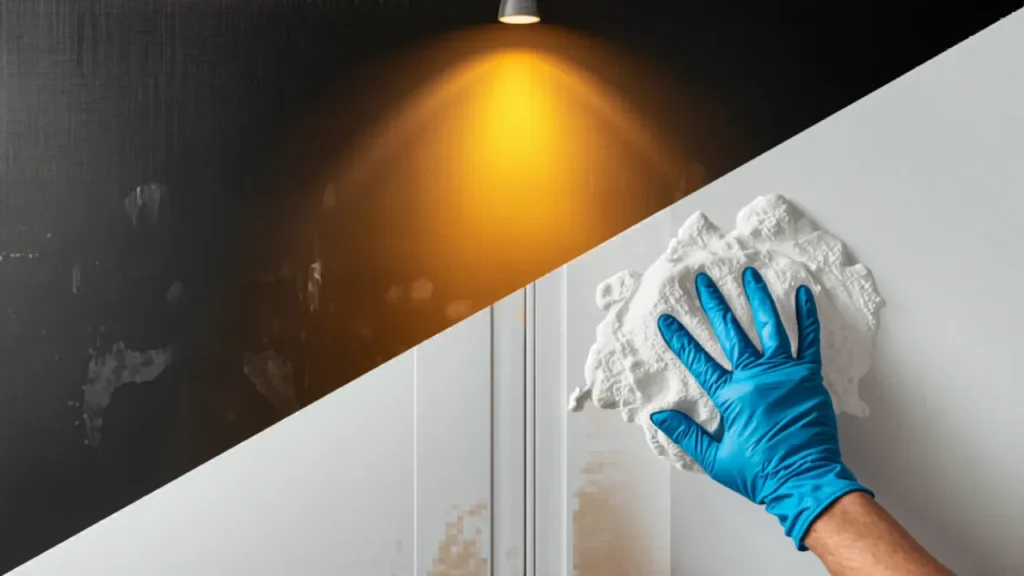
Cleaning does not end when the grease is gone.You still need to rinse and dry. That step is easy to skip, but it matters a lot. Any soap, vinegar, or cleaner left behind can make the surface look cloudy or feel sticky later.Use a fresh cloth dampened with clean water to wipe away the residue. Then dry the cabinet fully with a soft towel or dry microfiber cloth. Do not leave water sitting in corners, around edges, or under hardware.
Work from the top down so drips do not fall onto already cleaned areas. Clean one section, dry it, then move to the next. That simple habit saves time and keeps the job neat.This is also where you protect the finish. A cabinet that is washed and not dried properly can look worse than before. A cabinet that is rinsed and dried well will look cleaner, brighter, and smoother.It is a small step, but it makes a big difference.
Once the grease is gone, keep the surface from getting dirty again too fast. For finished wood, a small amount of mineral oil or a finish-safe cabinet polish can help restore shine. Use only products that match the cabinet finish. Do not put silicone-heavy products on wood if you may refinish the cabinet later. Silicone can create future problems.
For painted or laminate cabinets, a dry microfiber buff is often enough after cleaning. You usually do not need extra polish unless the surface calls for it. Aftercare is not only about shine. It is about making the cabinet easier to clean next time. A well-cared-for surface tends to resist grime better than one that is left dull and sticky.
A good routine is simple:
That last one helps more than many people realize. Less airborne grease means less buildup on the cabinets.
A lot of cabinet damage comes from cleaning too hard, not too little.
Here are the mistakes that cause trouble most often:
The biggest rule is simple: be gentle first. If the grease is still there, step up slowly. Do not jump straight to the strongest product in the house.
Cabinets look better when treated with patience. They also last longer.
Yes, but carefully. It is best to test a hidden spot first and use it lightly on sealed wood only.
It can be used in some cases, mainly on painted surfaces, but use it sparingly as it may dull the finish.
A quick wipe every week is recommended. Deep cleaning can be done monthly or as needed, especially near the stove.
A mild mix of dish soap and warm water is the safest starting point for most cabinet surfaces.
Yes, steam cleaning can damage cabinets if they are not properly sealed. It should only be used on well-sealed wood and avoided on laminate or damaged finishes.
Grease builds up from cooking oils, steam, and airborne particles. Regular cleaning, using a vent fan, and wiping high-touch areas can help prevent buildup.
Greasy cabinets do not need to stay greasy. With the right method, the job is simple, safe, and far less annoying than it first looks. Start with dish soap and warm water. Move to white vinegar or baking soda if the grease is more stubborn. Use a commercial degreaser when the buildup is heavy. Try steam cleaning only on safe, sealed surfaces. Use the right tools, rinse well, dry fully, and protect the finish after cleaning.
Most of all, stay consistent. A little attention each week is much easier than one huge rescue mission later. That is the real trick behind cleaning sticky grease off kitchen cabinets fast: do less damage, use less force, and clean before the mess has time to settle in. When you treat your cabinets with care, they repay you with a cleaner kitchen, a fresher look, and far less scrubbing next time.