
There is a special kind of joy that comes after a renovation. The new paint looks clean, the room feels brighter, and everything seems fresh again. Then you spot it, the dust. It is on the shelves, inside the vents, along the baseboards, and somehow even in places the contractors never touched.
Construction dust is not the same as normal household dust. It is finer, lighter, and much easier to spread around if you clean the wrong way. Drywall dust, silica dust, and sawdust all behave differently, but they share one frustrating trait: they travel. In many homes in the USA, that problem worsens due to forced-air HVAC systems and open floor plans, which can move dust from one room to another within minutes.
This guide shows how to quickly remove construction dust without spreading it, using a simple system that works well in American homes. The key is not just cleaning harder. It is cleaning in the right order, with the right tools, and with enough control to stop the dust from escaping into the rest of the house.
Construction dust is really a mix of different materials, and each one acts a little differently.
Drywall dust is usually the most common after a renovation. It is soft, powdery, and bright white. It comes from sanding and cutting drywall, and it sticks to almost everything.
Silica dust is more serious. It can come from cutting tile, concrete, brick, or stone. This type of dust is much smaller and more dangerous because the particles can go deep into the lungs.
Sawdust comes from cutting or sanding wood. It is usually easier to see, but that does not mean it is harmless. It can still irritate the lungs, settle into fabrics, and float around longer than expected.
Most renovation cleanups involve all three. That is why the job can feel endless if you do not have a good system.
The reason construction dust is so annoying is simple: many of the particles are tiny. Some are small enough to stay in the air long after the work is finished. You may wipe a surface clean, then find it dusty again the next day because the particles were still settling out of the air.
That is why sweeping alone never solves the problem. It may move the visible dust, but it also pushes fine dust back into the air. Once that happens, the dust can drift into vents, settle on furniture, and coat surfaces you already cleaned.
Dust is not only a cleaning issue. It is also a health issue.
In the USA, OSHA treats silica exposure seriously because repeated exposure can damage the lungs over time. Even short-term exposure to heavy dust can cause coughing, eye irritation, dry throat, sneezing, or breathing discomfort. People with asthma, allergies, or other respiratory conditions may feel it even more.
That is why proper cleanup matters. A fast cleanup is good, but a safe cleanup is better. The goal is to remove the dust without sending it back into the air.
Before you start cleaning, stop the dust from moving.
That is the first rule, and it matters more than most people think. If the dust spreads into clean rooms, your job gets bigger, and your results get worse.
If your home uses forced-air heating or cooling, turn the system off before cleanup begins. Dust can get pulled into the return vents and spread through the ductwork. Once that happens, the dust can end up all over the house.
Keep the system off until the dusty area is fully cleaned and the filter has been replaced.
Use thick plastic sheeting, ideally 6 mil, to seal off the work area from the rest of the house. Tape it over open doorways and create a barrier between dusty and clean spaces.
This simple step helps keep dust from drifting through hallways, open rooms, or stairwells. In a home with an open layout, it can make a huge difference.
Every vent is a pathway for dust. Cover supply and return vents with magnetic vent covers, painter’s tape, or plastic if needed. That way, dust does not get pulled into the HVAC system or blown around by accident.
Do not forget floor vents, ceiling vents, and smaller return openings in closets or hallways.
Dust gets into tiny openings. TVs, computers, speakers, lamps, and other electronics can collect construction dust fast. Furniture also picks it up, especially fabric pieces.
Cover items you cannot move. If possible, remove small objects from the room before cleaning begins. The less dust that lands on them, the less work you will have later.
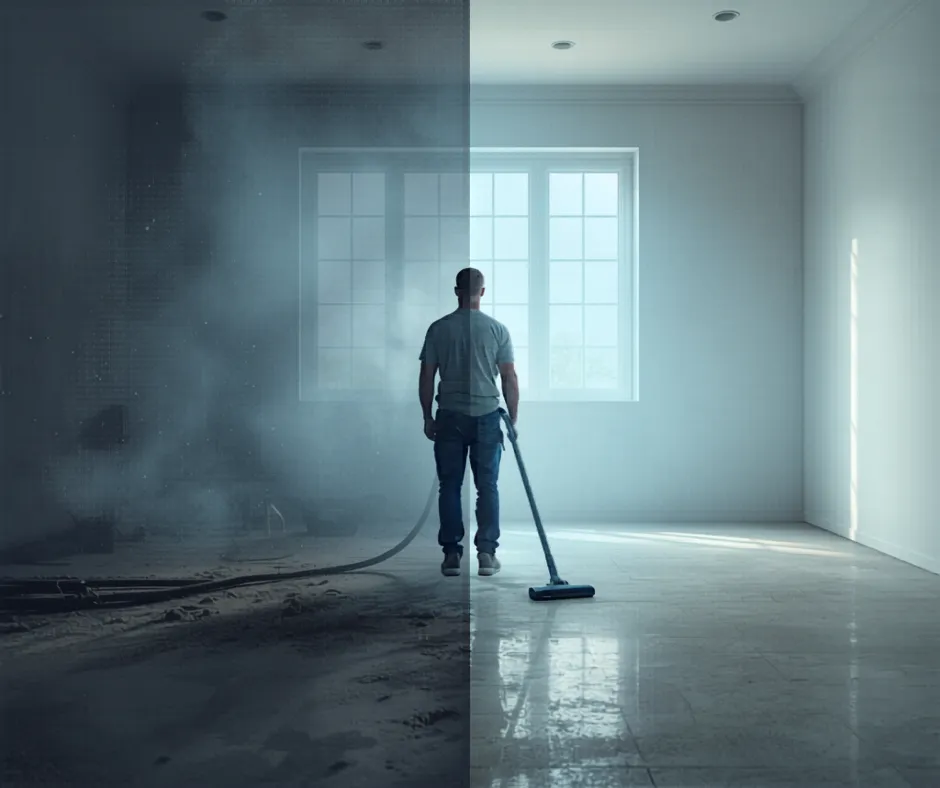
Start with the easy part: the big debris.
Pick up pieces of drywall, scraps of wood, broken trim, nails, screws, and anything else left behind by the renovation. Use heavy-duty contractor bags so the sharp edges do not tear through regular trash bags.
Wear an N95 mask during this part. It helps reduce how much dust you inhale while moving debris around. This step clears the way for the finer cleaning that comes next.
Once the larger debris is gone, focus on the air itself.
Open windows on opposite sides of the area if the weather allows it. Cross-ventilation helps move dust out of the room instead of letting it hang in the air. Place a box fan in one window facing outward so it pushes air and dust outside.
A HEPA air purifier can help capture finer dust particles that remain suspended in the air. In bigger cleanup jobs, some homeowners rent an air scrubber from places like Sunbelt or Home Depot. That can speed up the process when the dust load is heavy.
After setting up ventilation and filtration, let the dust settle for about 30 to 60 minutes before you start wiping surfaces. That short wait can save a lot of unnecessary re-cleaning.
This is where many people go wrong. They grab water too early, and the dust turns into a muddy mess. Dry dusting should always come before wet cleaning.
Use microfiber cloths or an electrostatic duster. These tools are much better than feather dusters, which often move dust around rather than trap it.
Work from the top down in this order:
Ceilings, then ceiling fans, then walls, then windowsills, then doors, then baseboards, then counters.
Do not forget the hidden spots:
the tops of cabinets, the backs of appliances, light fixtures, and the edges of shelves.
When you clean from top to bottom, dust settles on areas you have not yet cleaned. That means you only have to move through the room once in the right direction instead of chasing dust back and forth.
After dry dusting, vacuum every possible surface.
A regular vacuum is usually not enough because fine dust can leak back into the air. A true HEPA vacuum is the better choice. If you do not have one, a dust extractor or a Shop-Vac with a HEPA filter is a much safer option than a standard household vacuum.
Vacuum the floors, walls, upholstery, baseboards, window tracks, and even the edges of cabinets if needed. Go slowly. Fast passes will miss fine dust, especially in corners and along seams.
Clean or change the filter often. A clogged filter reduces performance and makes the machine less effective as the job progresses.
Wet cleaning is the final step for surfaces that still hold dust after vacuuming and dry wiping.
Use a microfiber cloth that is only slightly damp. It should not be wet enough to drip. Too much water will leave streaks, turn dust into paste, and make the cleanup harder.
Wipe walls and ceilings gently in circular motions. For hard floors, use a pH-neutral cleaner like Bona or Zep. Change the mop water often so you are not just moving dirty water around the room.
Tile and grout may need a steam cleaner if the dust has settled deep into the lines. That can be especially useful after bathroom or kitchen renovations.
This step is easy to overlook, but it matters a lot.
Replace the furnace filter with one rated MERV 8 or higher. If the renovation was heavy, you may want to change it again after a few days. Dust often continues to move through the system for a while after cleanup.
Remove vent covers, wash them, and let them dry before reinstalling. Vacuum inside the duct openings with a HEPA hose if you can reach them safely. This helps remove dust that may have settled near the opening.
If the cleanup was extensive, consider hiring a NADCA-certified duct cleaning service. In the USA, that can cost around $300 to $500 or more, depending on the home and the size of the system. For homes with serious dust buildup, it can be worth it.
Dust loves fabric. Even if hard surfaces look clean, curtains, rugs, sofas, and mattresses can still hold fine particles.
Wash curtains and machine-washable fabrics. HEPA vacuum upholstery and mattresses carefully. Then finish by buffing hard surfaces with a dry microfiber cloth to make them look truly clean.
This final polish matters more than people think. It removes the last visible haze and gives the room that fresh, finished feeling again.
To quickly remove construction dust without spreading it, you’ll need the right tools. Here’s what professionals recommend:
|
Tool |
Purpose |
|
HEPA vacuum or dust extractor |
Captures fine particles without blowing them back into the air |
|
Microfiber cloths (multiple) |
Traps dust instead of pushing it |
|
Electrostatic duster |
Attracts dust via static charge for quick dry dusting |
|
Plastic sheeting (6 mil) and tape |
Seals off work areas |
|
Magnetic or plastic vent covers |
Prevents dust from entering the HVAC system |
|
HEPA air purifier or air scrubber |
Removes airborne particles during and after cleaning |
|
Steam cleaner |
Lifts dust from tile, grout, and some upholstery |
|
pH-neutral floor cleaner |
Safely cleans hard floors without residue |
Open layouts look beautiful, but they make dust control harder. Without walls and doors to block the movement, dust can spread quickly from one area into another.
A zippered plastic doorway can help isolate the work zone without shutting down the whole house. It is a simple fix, but it works well for containing a mess in an open-concept home.
Forced-air systems are one of the biggest reasons construction dust spreads in USA homes. If the system is running while you clean, dust can end up in every room.
Turn off the system, cover the vents, and replace the filter after the cleanup. In many cases, a second filter change a few days later is a smart idea, especially if the renovation created a lot of fine dust.
Dust can drift into crawlspaces and attics, especially during larger projects. If those spaces were open during the renovation, take a quick look.
If dust has settled in the insulation or got deep into hard-to-reach areas, a professional cleaning may be the better choice. That is especially true if there is visible buildup or any sign that the dust has moved into other parts of the home.
Children and pets are more sensitive to dust, and they also tend to move through spaces faster, which can kick up particles again.
Keep them out of the dusty area until the dry dusting, vacuuming, and wet cleaning are finished. If silica dust was involved, be extra careful and do not let them return to the area too soon.
A few common mistakes can turn a manageable cleanup into a much bigger job.
Using a regular vacuum is one of the worst. It may seem convenient, but it can leak fine dust back into the air. Wet cleaning too early is another problem because it creates muddy residue. Skipping the HVAC filter change can also undo your work by sending dust back through the system.
Feather dusters and dry Swiffers often move dust around rather than trap it. And not wearing a mask means you end up breathing what you are trying to remove.
The biggest mistake of all is cleaning only once and calling it done. Construction dust often takes more than one round to fully remove.
Construction dust can remain in the air from minutes to several hours depending on particle size and ventilation. Fine dust like silica can stay airborne longer and spread through HVAC systems.
No, regular vacuums are not suitable for construction dust. Fine particles can clog filters and recirculate into the air. A HEPA or shop vacuum is recommended for safe cleaning.
You should clean at least two to three times after a renovation. Initial cleaning removes debris, while follow-up cleanings target fine dust and improve air quality.
Yes, construction dust can be harmful. It may contain fine particles like silica that can affect the lungs and cause respiratory issues with repeated exposure.
Use a HEPA vacuum on all surfaces, then wipe with a damp microfiber cloth. Improve ventilation and clean from top to bottom to prevent dust from resettling.
The best way to get rid of construction dust quickly without spreading it is to follow a simple order: contain the area, dry-dust from top to bottom, HEPA-vacuum everything, and finish with careful wet cleaning.
That sequence keeps the dust from travelling into the rest of the house and saves you from doing the same work twice. In a USA home, especially one with forced-air HVAC or an open layout, that order makes all the difference.
Once the dust is gone, your renovation finally feels complete. The space looks fresh, the air feels lighter, and the work you put into the home finally shines.