Agape Cleaning Services
  • Working Hours: Mon - Sat Open 24 Hours
Agape Cleaning Services
  • Home
  • About Us
  • Services
    • Residential services
      • House Cleaning
      • Kitchen Cleaning
      • Window Cleaning
      • Standard Cleaning
      • Move-In/Move-Out Cleaning
      • Deep Cleaning
    • Commercial services
      • Construction Cleaning
      • Office Cleaning
      • Post-Event Cleaning
      • Vacation Rental Cleaning
      • Carpet cleaning
      • Same-Day Cleaning Service
  • Team
  • Projects
  • Blog
  • Areas We Serve
  • Contact Us

How to Clean Windows Without Streaks ( Step-by-Step Guide)

  • Home
  • How to Clean Windows Without Streaks (Easy Step-by-Step Guide)
How to Clean Windows Without Streaks (Easy Step-by-Step Guide) (1)
  • April 30, 2026
  • RokOnline

Cleaning windows should make them clear and shiny. But many times, streaks are left behind. This happens even after a lot of hard work. The main problem is not effort; it is using the wrong method. Many people use too much cleaner, the wrong cloth, or clean windows in direct sunlight. These small mistakes can cause marks and lines on the glass.

If you’re wondering how to clean windows without streaks, the good news is that small changes in your method can make a big difference.

In this guide, you will learn simple and easy ways to clean windows without streaks. You do not need expensive tools or special skills. Just follow the right steps. By the end, your windows will look clean, bright, and streak-free every time.

What Is the Best Way to Clean Windows Without Streaks?

The best way to clean windows without streaks is to use equal parts white vinegar and water. Spray it on the glass, then wipe it with a soft microfiber cloth. After that, use a squeegee to remove the water from top to bottom in straight lines. Wipe the squeegee blade after every stroke. Do not clean windows in the hot sun, and do not use paper towels because they leave marks and lint.

Why Do Windows Get Streaky?

Before we talk about how to fix the problem, let us talk about why it happens. Once you understand this, everything else makes perfect sense.

Why Cleaning in Sunshine Makes Things Worse?

Here is something that surprises most people. A bright, sunny California day is actually the worst possible time to clean your windows.

When the glass is hot from the sun, your cleaning solution evaporates in just a few seconds, before you even have time to squeegee it off. It dries right onto the glass and leaves a hazy film. That film is your streak.

The best time to clean windows is early morning before the sun gets high, late afternoon when the light is low, or on an overcast day. If the glass feels warm to the touch, wait. A cool glass surface is what you want.

The Right Tools for Streak-Free Window Cleaning

Most people reach for whatever is nearby, usually paper towels and a spray bottle. This is where the problem starts.

Why Paper Towels Are the Enemy

Paper towels fall apart when they get wet. As they break down, they leave tiny white fibres on your glass. Then, when the light hits those fibres, you see streaks. They also push dirt sideways across the glass instead of lifting it off. They are cheap to buy but expensive in terms of the time you waste redoing your work.

What You Actually Need

The single most important tool for how to clean windows without streaks is a good squeegee. For standard windows, the kind found in most California homes and apartments, a 10 to 12-inch squeegee with a metal handle and a rubber blade works perfectly. The rubber blade needs to be smooth with no nicks or cuts in it. A damaged blade is the number one reason people get vertical streak lines running down their glass. Replacement blades cost under three dollars and take thirty seconds to swap out.

You also need three microfiber cloths. One goes on your scrubber to wash the glass. The second one wipes the squeegee blade clean after every single pass across the glass. The third one cleans up any drips along the edges and corners. You need two buckets, one for your cleaning solution and one for clean rinse water. And you need a T-bar scrubber or a soft sponge applicator to spread the solution across the glass before squeegeeing.

That is your complete kit. Nothing expensive. Nothing hard to find.

What to Never Put on Glass

Never use abrasive sponges; they scratch the surface. Never use razor blades on coated or tinted glass; this is very common in California homes with UV-tinted windows, and a razor blade will destroy the coating permanently. Never use a pressure washer on residential windows; the force blows out the seals around the frame and pushes water inside your walls. And despite what your grandparents may have told you, do not use a newspaper. Modern newspaper ink is water-based and transfers grey smears onto glass, especially in humid coastal California air.

The Best Cleaning Solutions — All Simple, All Cheap

You do not need to spend money on fancy commercial products. The best solutions for streak-free window cleaning are made from things already in your kitchen.

The Vinegar Solution

Mix one part distilled white vinegar with one part distilled water. Put it in a spray bottle. That is it.

The word distilled before water matters a great deal, especially in California. Regular tap water in most California cities contains dissolved minerals. When that water dries on glass, those minerals leave deposits behind. Distilled water contains no minerals, so it dries completely clean. The vinegar is mildly acidic, which cuts through grease, light mineral buildup, and fingerprints with ease, and it evaporates without leaving any residue.

This solution works for almost every regular cleaning situation in a California home.

The Dish Soap Solution, For Dirty Windows

For very dirty windows,  heavy grime from a Santa Ana wind event in Southern California, post-construction dust in a new development, or thick pollen coating in the Central Valley during spring, mix two to three gallons of warm water with exactly one teaspoon of dish soap.

One teaspoon. Not a squirt, not a splash, one precise teaspoon measured out. This sounds surprisingly small, but too much soap is one of the most common mistakes people make. Extra soap creates extra suds, and those suds leave a film on the glass that dries into streaks. One teaspoon is the right amount.

The Citric Acid Solution

If you live in Los Angeles, San Jose, Fresno, Riverside, or any other California city with hard water, this solution is your best friend. Mix one tablespoon of citric acid powder with one cup of warm water. Spray it on the glass, let it sit for two to three minutes, then scrub and rinse.

Regular glass cleaners cannot dissolve mineral deposits; they can only rinse away loose dirt. Citric acid actually breaks the bond between the mineral and the glass at a chemical level. This is the only DIY solution that genuinely removes that cloudy, frosted-looking buildup that develops on California windows over the summer. Citric acid powder is sold in most grocery stores and online for under ten dollars per pound.

_ Step-by-Step Guide How to Clean Windows Without Streaks

Step-by-Step Guide: How to Clean Windows Without Streaks

Here are the exact steps in the exact right order. Each detail matters.

Step 01: Clean the Frame and Track First

Before you touch the glass, clean the window frame and the track at the bottom. Vacuum out the track to remove loose dirt. Wipe the frame with a damp cloth. If you skip this step and clean the glass first, dirt from the frame will drip down onto your clean glass, and you will have to start over.

A good trick for the narrow corners of window tracks is to wrap a microfiber cloth around the flat side of a butter knife and use it to scrape out the grime. It sounds odd, but it reaches spots that nothing else can.

Step 02: Pre-Rinse Dirty Windows

If the glass has visible pollen, bird droppings, or dust on it, rinse it with plain water from a spray bottle before you do anything else. Rubbing dry grit across glass creates micro-scratches that build up over time into a permanent hazy appearance. One quick pre-rinse protects the glass and takes thirty seconds.

Step 03: Apply Your Solution from Top to Bottom

Dip your scrubber or sponge into your cleaning solution, squeeze out the excess so it is wet but not dripping heavily, and wipe across the glass from the very top downward. Work in overlapping horizontal strokes. Always move from top to bottom. Dirty water runs down with gravity, so you always want it moving toward the areas you have not cleaned yet.

Step 04: Squeegee in Straight Lines

Place your squeegee at the very top corner of the glass. Pull it straight down in one smooth, uninterrupted stroke all the way to the bottom. The moment you finish that stroke, wipe the rubber blade clean with your second microfiber cloth. Then move over one inch and do the next stroke, overlapping slightly with the previous one.

Never lift the squeegee off the glass in the middle of a stroke. The moment the blade leaves the glass mid-stroke, it leaves a line. Stay in contact with the glass from the very top to the very bottom of each pass.

Step 05: Wipe the Edges and Corners

Water always collects along the bottom edge of the glass and in the four corners after squeegeeing. Take your dry detailing cloth and carefully wipe around the full border of the glass pane. This is a small step that takes under a minute, and it is the reason why professional results look perfect close up rather than just good from a distance.

Step 06: Check at an Angle in Natural Light

Do not look straight at the glass to check your work. Instead, step to the side and look at the window from a 45-degree angle while natural light is hitting it. Streaks that are completely invisible from straight on become obvious from an angle. If you see one, buff it out right away with a clean, dry microfiber cloth in small circular motions. A fresh streak comes off in seconds; one that has dried for ten minutes takes much more effort.

Inside vs. Outside Windows — California-Specific Differences

Cleaning Inside Windows by Room

Every room in a California home creates different grime on the interior glass. Kitchen windows collect cooking grease and oil vapour. Add one small drop of dish soap to your vinegar solution for these. Bathroom windows in humid coastal areas like San Francisco or Santa Barbara develop soap scum and mould around the edges, a citric acid spray held on the glass for sixty seconds dissolves this without any hard scrubbing. Living room and bedroom windows mostly collect dust, fingerprints, and in homes with dogs or cats, nose-height smudge marks that your basic vinegar solution removes without any fuss.

When working inside, use less water than you would outside. Put a folded towel along the windowsill to catch any drips before you start.

Cleaning Outside Windows in California

Outdoor glass in California faces very specific regional challenges. In Los Angeles and the Inland Empire, smog particles and car exhaust settle on glass and form a greasy, brownish film that requires the dish soap solution to cut through. In the Bay Area and coastal zones, salt air from the Pacific deposits a thin, hazy layer of sodium on the glass continuously. Light rinses every few weeks between deep cleans prevent this from building up into a serious problem. In the Central Valley and high desert areas like Palm Springs or Lancaster, fine silica dust from wind events is abrasive at a microscopic level, making a pre-rinse before any scrubbing essential.

Cleaning by Window Type

The type of window in your home changes how you clean it, and most guides ignore this completely.

Double-Hung Windows

These are the most common window types in California homes. On most modern double-hung windows, both the top and bottom sections tilt inward toward you. Tilt the top section down first, clean the outside face of it from inside your home, then tilt the bottom section up and do the same. This approach eliminates the need for a ladder on first and second-floor windows. Most homeowners with tilt-in windows never even realise this feature exists on their own windows.

Casement Windows

Casement windows open by cranking outward on a hinge. This makes them the easiest window type to clean; the entire outside surface of the glass swings toward you, and you clean both sides from inside. The one thing to be careful about is not pressing the squeegee too hard toward the hinge side, as this can stress the frame seal over time.

Sliding Glass Doors

Sliding glass doors are common in California homes that open to patios and backyards. The outside track collects an enormous amount of dust and debris, especially in Southern California. Clean the track thoroughly before you touch the glass, and use your soap solution rather than vinegar on these larger surfaces since they tend to accumulate heavier grime.

Skylights

Skylights are the most neglected glass surface in any home. For the inside surface, a flat microfiber mop on an extension pole works well without requiring you to climb on anything. For the outside, a water-fed pole system,  a long telescoping pole with a brush connected to purified water, produces a perfectly streak-free result because purified water leaves no residue as it dries.

High and Second-Story Windows

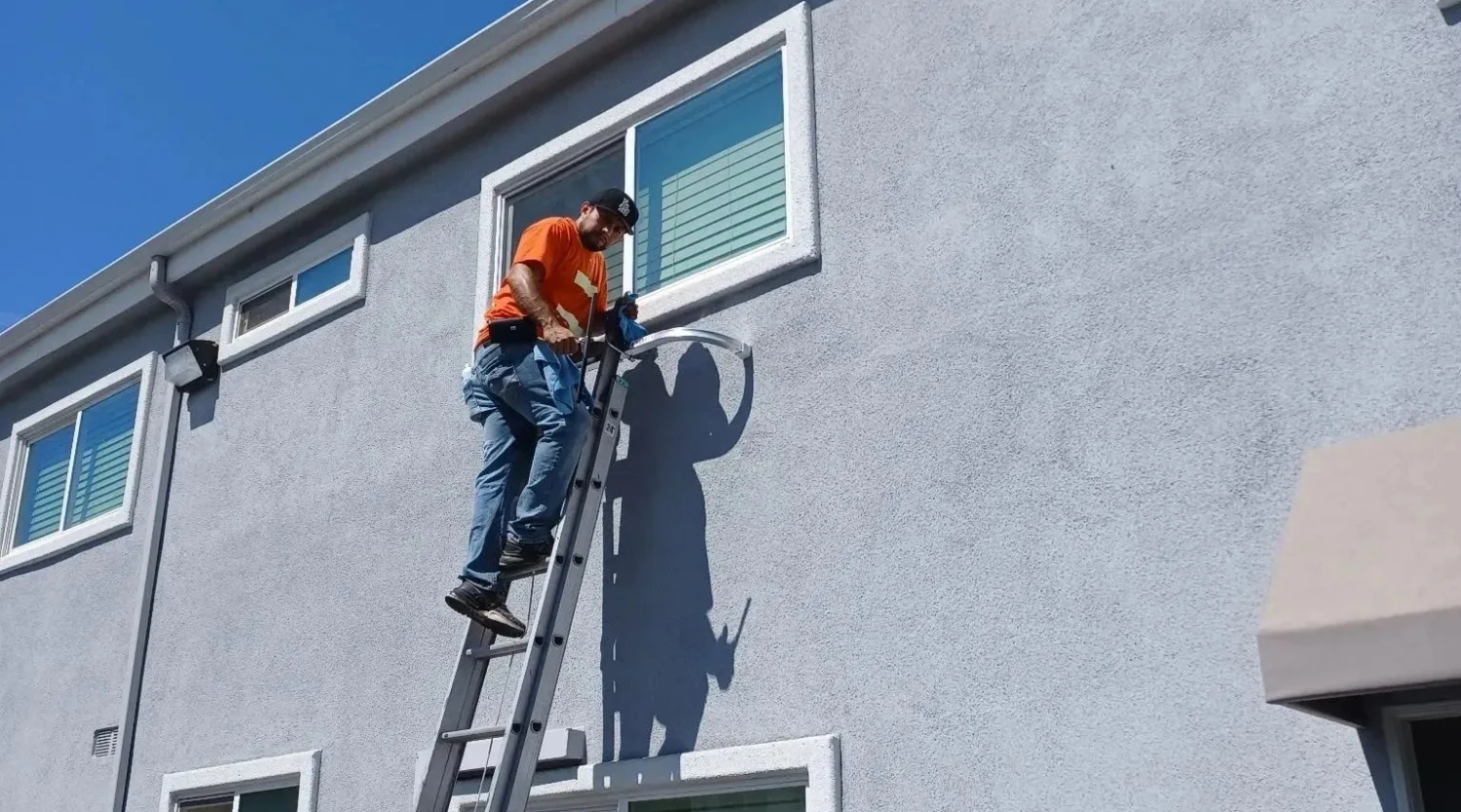
Always position a ladder against the wall beside the window, never against the glass or the frame. For windows that cannot tilt inward, a telescoping extension pole with a squeegee head reaches second-story glass safely from the ground. Any window above fifteen feet is genuinely worth calling a professional for. Falls from ladders are among the most common causes of serious injury at home, and streak-free windows are not worth a trip to the emergency room.

Seasonal Window Cleaning in California

Spring (March through May)

Spring in California brings heavy pollen from oak, eucalyptus, and cypress trees along with the first warm Santa Ana winds pushing dust across Southern California. A full exterior clean with a pre-rinse is the priority. This is your most important clean of the year.

Summer (June through August)

Central Valley summers bring dust and heat. Coastal areas get salt air. This season calls for lighter, more frequent maintenance rather than one heavy clean. A quick rinse and wipe every four to six weeks keeps buildup manageable and prevents mineral deposits from hardening in the summer heat.

Fall (September through November)

Fall is the season of wildfire smoke in California. Ash and smoke residue leave a distinctive brown-grey film on exterior glass, particularly in Northern California and the foothills. A dish soap solution applied generously and allowed to dwell for a minute before squeegeeing handles smoke film better than vinegar. This is also your second major full clean of the year; get it done before the rainy season starts in November.

Winter (December through February)

California winters are mild enough that outdoor window cleaning is possible year-round in most of the state. In higher-elevation areas like Lake Tahoe or Big Bear, add 1 cup of rubbing alcohol per gallon of your cleaning solution on cold days to prevent the liquid from freezing on cold glass. Never use hot water on cold glass; the sudden temperature difference can crack the pane, particularly on older single-pane windows still found in many pre-1980s California homes.

Common Mistakes That Cause Streaks

Avoid these mistakes if you want clean, streak-free windows:

  • Using paper towels instead of microfiber cloths
  • Cleaning windows in direct sunlight
  • Using too much soap or cleaning liquid
  • Not rinsing or wiping properly
  • Using a dirty cloth or sponge
  • Not cleaning the squeegee blade during use
  • Skipping edge and corner drying
  • Using hard tap water in areas with minerals
  • Cleaning the glass after the frame (instead of before)

How to Keep Windows Cleaner for Longer

A great cleaning session should do more than make your windows sparkle today. Done right, it should keep them cleaner for weeks longer than usual.

Apply a Hydrophobic Treatment

Products like Rain-X create a water-repelling layer on the glass surface. When rain hits treated glass, the water beads up and rolls off rather than sitting there and drying into mineral deposits. This is especially valuable along the California coast, where rain events deposit salt water directly on your glass, and in hard-water inland cities where every water drop that dries on glass leaves minerals behind. Reapply every three to four months.

Clean Your Window Screens Separately

Window screens are the most overlooked source of window grime in California homes. Every time it rains or the sprinklers run, water passes through the screen and carries all the accumulated dust and pollen directly onto the glass below. Take screens off twice a year, lay them on the driveway, scrub with soapy water and a soft brush, rinse, and let them dry completely before reinstalling. This single habit can cut your full cleaning frequency almost in half.

Redirect Your Sprinklers

If your garden sprinklers hit your windows, even indirectly, every cycle is depositing hard water minerals directly on your glass. Redirecting a single sprinkler head takes five minutes and can prevent months of stubborn mineral buildup that takes real effort to remove.

DIY vs. Professional Window Cleaning: An Honest Decision Guide

For a single-story California home or any home with tilt-in double-hung windows, the DIY approach using everything in this guide produces results that look exactly as good as professional work. Your full tool kit costs around twenty to thirty dollars one time, and after that first purchase, you are equipped for years.

Professionals earn their fee on multi-story homes that require exterior ladder access, on homes with fixed picture windows that cannot tilt inward, and on properties where mineral buildup has been accumulating for years and has hardened to the point where it needs commercial descaling equipment to remove. If your home falls into any of these categories, booking a professional twice a year,  in spring and in fall, and maintaining the results yourself between visits is the smartest and most cost-effective approach.

Frequently Asked Questions

The fastest way is to use a mix of vinegar and distilled water, wipe with a microfiber cloth, and remove water with a squeegee in straight lines.

Windows streak mainly because of hard tap water, too much soap, dirty cloths, or cleaning in hot sunlight that dries liquid too fast.

Most homes should clean windows twice a year, but dusty or coastal areas may need light cleaning every 1 to 2 months.

Yes, vinegar is safe for normal glass. It removes grease and dirt well, but should not be used on stone or special coated surfaces.

The best method is using a citric acid solution, which breaks down mineral buildup and restores clear glass.

Yes, a squeegee is important because it rem

Get Streak-Free Windows Without the Hassle

Tried everything but still seeing streaks? Skip the frustration and let professionals handle it properly. Enjoy crystal-clear windows without wasting time, effort, or money on trial and error.


100% Streak-Free Guarantee

Safe, Professional Equipment

Fast & Reliable Service

Book Your Window Cleaning Today

Previous Post

Leave a comment

Cancel reply

Recent Posts

  • How to Clean Windows Without Streaks (Easy Step-by-Step Guide)
  • Best Time to Clean Windows in California?
  • House Cleaning Cost in California 2026? Get a Fast Free Estimate
  •    7 Easy Ways to Clean Sticky Grease Off Kitchen Cabinets Fast
  • How to Get Rid of Construction Dust Quickly Without Spreading It

Recent Comments

No comments to show.

Recent Comment

    Tags

    Recent Post

    • cleanu
      April 30, 2026 How to Clean Windows Without Streaks (Easy Step-by-Step Guide)
    • cleanu
      April 30, 2026 Best Time to Clean Windows in California?
    • cleanu
      April 30, 2026 House Cleaning Cost in California 2026? Get a Fast Free Estimate
    • cleanu
      April 30, 2026    7 Easy Ways to Clean Sticky Grease Off Kitchen Cabinets Fast
    • cleanu
      April 30, 2026 How to Get Rid of Construction Dust Quickly Without Spreading It

    Agape Cleaning Services offers dependable residential and commercial cleaning, helping keep spaces clean, fresh, and welcoming through detailed surface cleaning and effective dust removal.

    Facebook-f Twitter Linkedin-in Instagram

    Services

    • House Cleaning
    • Office Cleaning
    • Window Cleaning
    • Standard Cleaning
    • Construction Cleaning
    • Post-Event Cleaning
    • Vacation Rental Cleaning
    • Move-In/Move-Out Cleaning

    Contact Info

    • 77564 Country Club Dr STE 109 Palm Desert, CA 92211
    • Working Hours: Mon - Sat Open 24 Hours
    • Phone: (949) 566-4664
    • Email: edgar@agapecleaningservices.us
    Agape Cleaning Services

    © 2026 Agape Cleaning Services. All Rights Reserved.

    Powered by Rok Online