
An office can look clean and still be dirty. The floors are vacuumed, the bins are empty, and yet the keyboard everyone shares, the fridge handle in the break room, and the vents overhead are quietly collecting what no one gets around to wiping. That gap between looks clean and is clean is what a good checklist closes.
After years of cleaning offices around Palm Desert, we’ve found the difference between a workplace that stays healthy and one that slowly slides is rarely effort. It’s structure. Without a written routine, the easy, visible jobs get done every day, and the important, invisible ones get pushed to later until a flu season or a client visit forces a scramble.
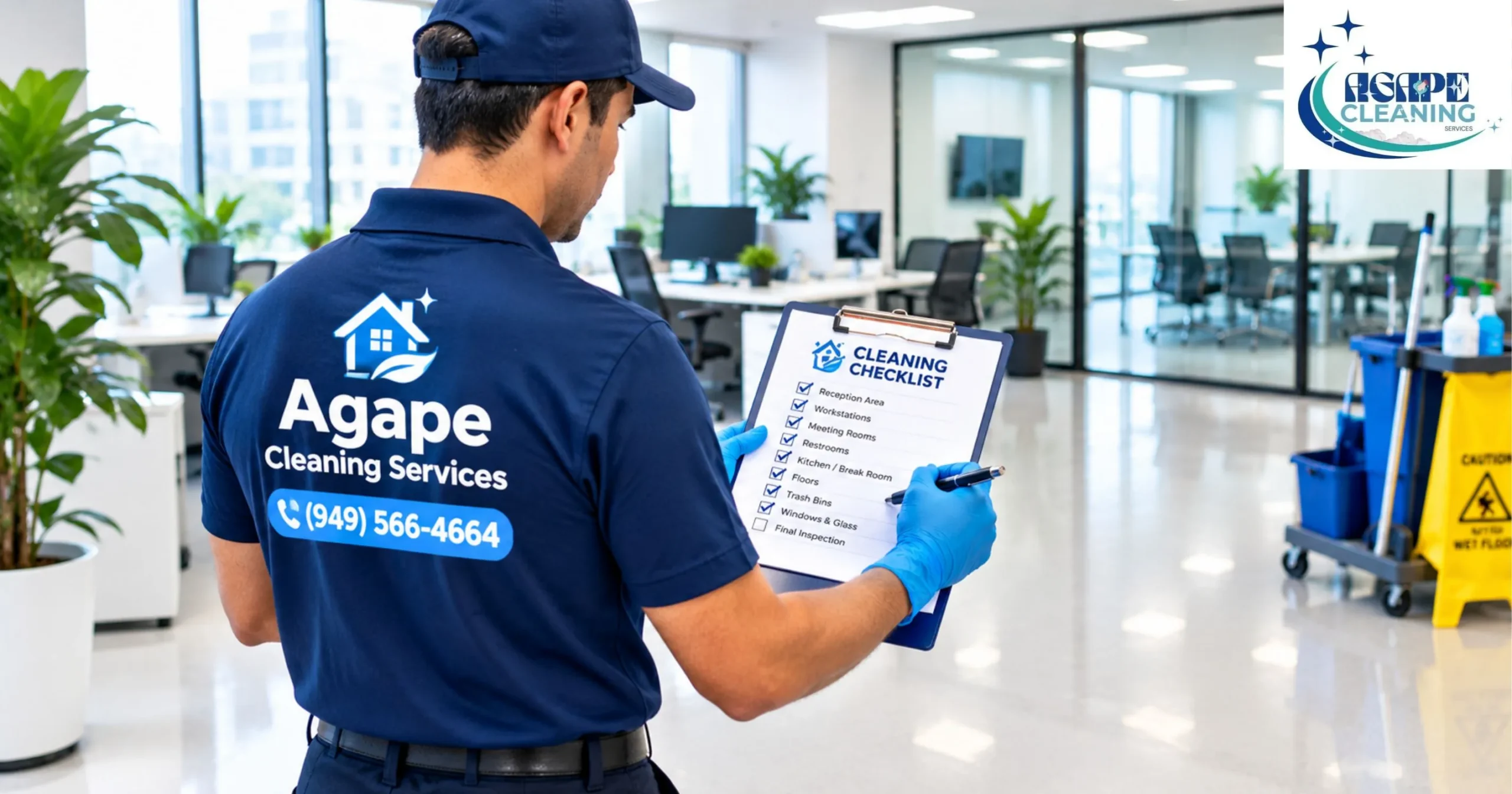
The checklist below splits the work into daily, weekly, monthly, and seasonal tasks, organized by the areas that genuinely need attention. Use it to run your own cleaning, to set expectations with a cleaning company, or to check whether the one you already pay is doing everything it should.
These are the tasks that keep a workspace usable and hygienic day to day. Most of them are quick, but skipping even one for a week is enough for people to notice. Daily work is best done after hours so it doesn’t interrupt anyone.
Entrance & reception
Desks & workstations
Restrooms
Break room & kitchen
Floors & shared areas
Weekly tasks handle the buildup that daily cleaning doesn’t reach. A fixed day works best, so people know when the fridge gets cleared or a room is briefly out of use.
Monthly tasks protect the things that are expensive to replace, floors, furniture, and air quality, and tackle the spots almost everyone forgets.
A few jobs only make sense every three to six months, or around a season change. These are usually worth handing to a professional crew with the right equipment.
Tie these to the calendar so they don’t drift: carpets after the holidays, windows in spring, HVAC before summer in a desert climate.
If you only tighten up one part of your routine, make it this one. Research led by microbiologist Dr. Charles Gerba found the average office desk can carry hundreds of times more bacteria than a toilet seat, with counts climbing through the day and peaking after lunch (EHS Today). Shared surfaces are where colds and stomach bugs move from one person to the whole floor.
These deserve daily disinfection, not a weekly wipe:
Matching the product to the surface matters too: a disinfectant needs its full dwell time to actually kill germs, and electronics do better with wipes made for them than with a soaked cloth.
A checklist written for a humid city doesn’t quite fit the Coachella Valley. Palm Desert offices face a few conditions that standard routines miss, and they’re the reason dusting here is never really done.
Fine dust gets everywhere
Desert dust is powder-fine and rides in on shoes, clothing, and every open door. It settles on monitors, vents, and blinds faster than most owners expect, so horizontal surfaces and electronics usually need attention more often than a weekly schedule assumes.
HVAC runs almost year-round
With cooling going for much of the year, vents and filters pull in that fine dust continuously and push it back around the room. Keeping vents and returns clean isn’t just tidiness here; it’s air quality. Build a filter check into the monthly list rather than waiting for a service call.
Entryways carry the heaviest load
Sand and grit tracked in from parking lots and patios grind into entry carpet and wear hard floors. Lobbies and entrances in valley offices generally need daily sweeping and mopping, not the every-other-day pace that works in cooler, wetter climates.
Dry air shows streaks
Low humidity means glass and stainless dry fast and show every smear, so technique and the right cloth matter more than usual on windows, partitions, and appliances.
If your current routine was copied from a generic template, these are the first places it tends to fall short.
There’s no single answer; it depends on how many people pass through and what kind of work happens there. As a starting point:
When in doubt, clean high-touch surfaces and restrooms more often than feels necessary, and let the lighter tasks flex around your actual foot traffic.
You don’t need a warehouse of products. A small, well-chosen kit covers almost everything on this list:
Two habits matter more than any product: let disinfectant sit for its full dwell time, and keep restroom and kitchen cloths strictly separate so you’re not moving germs around.
Plenty of small offices run their own cleaning well, especially with a checklist like this one taped to the supply cabinet. It works best when someone genuinely owns the routine, and the office is small enough that tasks don’t pile up.
Bringing in a professional service tends to make sense once the office grows, once restrooms and floors need equipment you don’t own, or once “whoever remembers” stops being a reliable plan. A good cleaning company also carries insurance, trains for the tasks, and gives you a scope of work you can hold them to.
If you’re comparing providers, a few questions sort the serious ones from the rest:
Tip: Save or print this checklist and keep it in the break room. Whether your team cleans or a service does, it turns “I think it’s clean” into something you can actually verify.
The essentials are trash and recycling removal, restroom cleaning and restocking, disinfecting high-touch surfaces like door handles and keyboards, wiping break room counters, and vacuuming or mopping high-traffic floors. These are best done after business hours.
Most offices do well with carpet deep cleaning every three to six months. High-traffic lobbies and entryways may need it quarterly, while private offices can often stretch to six months. Regular vacuuming in between extends carpet life.
Regular cleaning handles everyday dirt, surfaces, trash, floors, and high-touch points. Deep cleaning targets buildup that routine work misses: carpets, upholstery, vents, inside appliances, and hard-to-reach areas. It happens less often but keeps a space from slowly degrading.
Vents and returns, the undersides of desks and chair legs, light switches, baseboards, window sills, and the backs of appliances. Blinds and the tops of tall cabinets are close behind.
A small office usually takes one to two hours for a standard clean. Deep cleaning, or a larger space, can run several hours depending on square footage and condition.
A checklist is only as good as the follow-through. If keeping up with it has become one more thing on an already full plate, that’s where we come in.
Agape Cleaning Services provides office and commercial cleaning across Palm Desert and the Coachella Valley, built around the dust, heat, and traffic that offices here actually deal with. We’ll walk your space, agree on a scope, and give you a routine you can count on, backed by a team our clients consistently rate five stars.
Ready for an office that stays clean? Call us at (949) 566-4664 or request a free estimate, and we’ll put together a plan that fits your space and schedule.