
A church cleaning checklist is a written list of cleaning jobs, split by room and by how often each job gets done. The easiest way to run one is in five rounds: a quick reset around every service, a weekly clean for each room, a monthly detail round, a quarterly check on the hard-to-reach spots, and a few yearly jobs that usually go to professionals.
The checklist below covers all five. It also covers the parts most lists skip: what to do after a wedding or funeral, how to clean around sacred items, and how to stop volunteers from doing the same job twice while another one gets missed.
How often should a church be cleaned? Restrooms, door handles, entry floors and the nursery need attention every time the building is used. Sanctuary floors, pews and kitchens need a proper clean once a week. Vents, light fixtures, upholstery and glass can sit on a monthly or quarterly round. Carpet extraction, floor refinishing and pressure washing are usually yearly jobs.
These four habits make every item on the list work better.
Dirt and grease get in the way of disinfectant. Wipe a surface with soap or detergent first, then apply disinfectant if it is needed. The CDC’s guidance for cleaning a facility says high-touch surfaces should be cleaned regularly, and that disinfecting is most useful where someone has been sick or where traffic is heavy. Whatever product you use, leave it wet on the surface for the contact time printed on the label.
Dust ceiling-level items first, then shelves and sills, then handles and tables, and finish with the floors. Dust that falls on a clean floor means doing the floor twice.
Finished wood pews, stained glass, stone and carpet each need something different. Test any new product on a hidden spot first, and never mix cleaning chemicals.
Altar linens, communion ware, vestments, candles and anything used in worship should be cleaned the way your pastor or altar guild prefers. Agree on who handles them before the first cleaning round.
A small trick that saves a lot of trouble: use color-coded cloths. For example, red for restrooms, blue for general areas and green for the kitchen. A restroom cloth should never end up on a coffee counter.
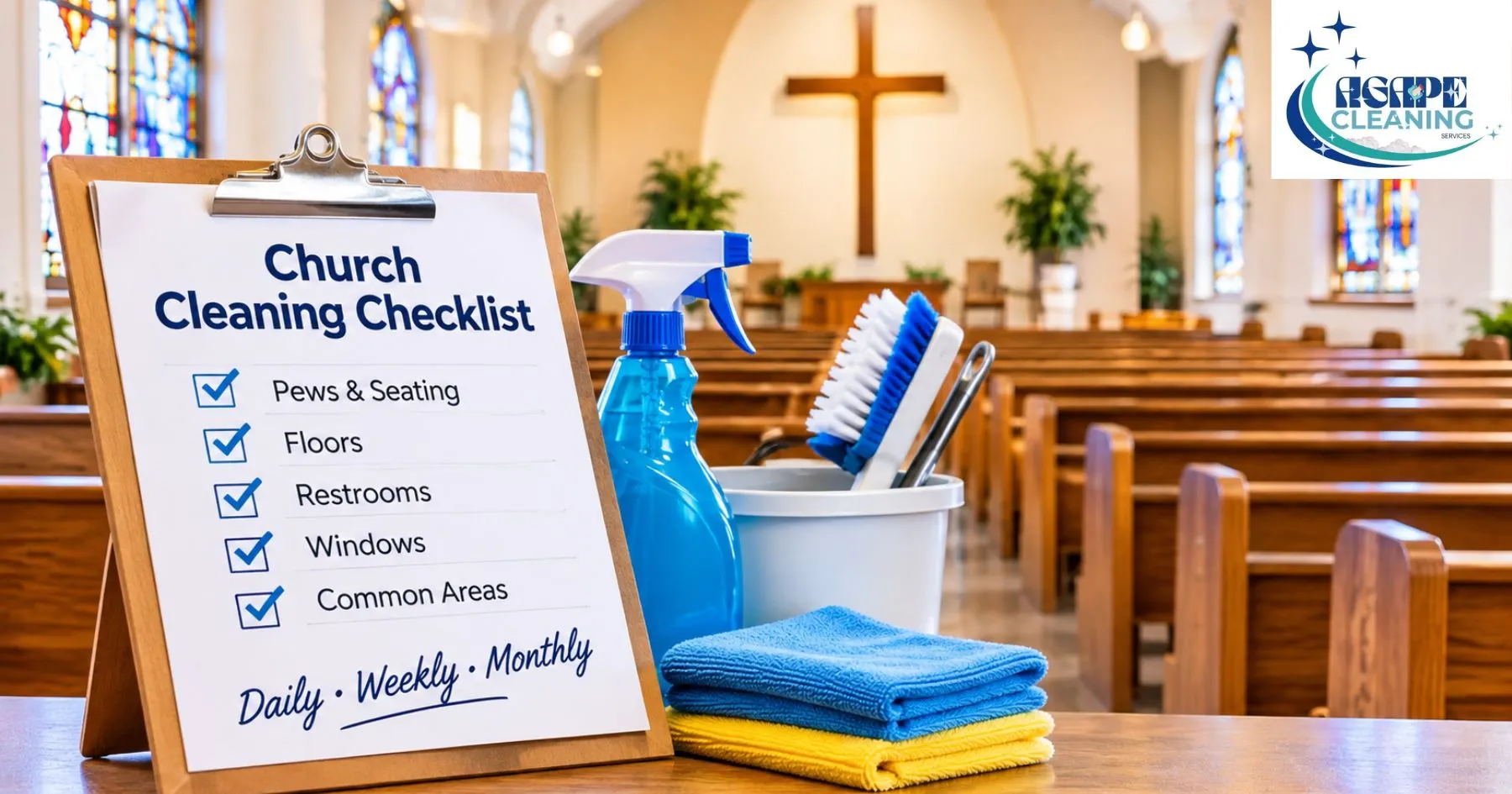
Daily work is short. Most of it is about hygiene and first impressions.
☐ Check the day’s event schedule so you know which rooms are in use
☐ Restrooms: refill soap, towels and toilet paper, and look for spills or smells
☐ Wipe door handles, push plates, handrails and light switches
☐ Sanctuary: straighten hymnals, clear old bulletins, check the floor for debris
☐ Entrance: mats flat and clean, glass free of fingerprints
☐ Nursery: toys that are set out are clean, changing table wiped, trash emptied
☐ Walk the pews and chairs for trash, tissues and left-behind items, and bring anything found to the lost-and-found box
☐ Wipe pew backs, armrests and chair arms, since that is where hands rest
☐ Empty trash in every room that was used and replace the liners
☐ Restrooms: quick clean of toilets, sinks, counters, mirrors and floors
☐ Nursery: disinfect hard toys and the changing table, and set aside soft toys that need washing
☐ Coffee area and kitchen: wash cups, wipe counters, empty grounds, and take food trash out of the building the same day
☐ Spot-clean spills on carpet right away, before they set
☐ Vacuum or sweep the main aisle and entrance
☐ Lock-up check: lights off, coffee makers and ovens off
Weekly cleaning catches what builds up over several services. Try to schedule it so it does not overlap with programs.
☐ Vacuum aisles and under the seating
☐ Dust pew tops, rails, window sills, ledges and the platform
☐ Damp-wipe pew backs, armrests, kneelers and the pulpit with a wood-safe cleaner
☐ Wipe microphone stands, music stands, the podium and screens with a slightly damp cloth. Do not spray cleaner directly on electronics.
☐ Clean fingerprints from glass doors and display cases
☐ Straighten pew Bibles and hymnals, and replace damaged ones
☐ Scrape wax drips from candle holders once the wax has cooled
☐ Vacuum or shake out mats, then mop hard floors
☐ Wipe the welcome desk, brochure racks and offering tables
☐ Clean glass doors and push plates
☐ Sweep entrance steps and check handrails and ramps
☐ Scrub toilets, urinals, sinks and counters, including the base and the back of each toilet
☐ Clean mirrors, stall doors, locks, dispensers and baby-changing stations
☐ Mop with a disinfecting solution, paying attention to corners and edges
☐ Empty sanitary bins
☐ Check for slow drains and dripping faucets, and report them to whoever handles repairs
☐ Disinfect hard toys, cribs, changing tables, and low tables and chairs. Follow the label’s contact time, and rinse anything a child may put in their mouth if the label says to.
☐ Wash soft toys, blankets and crib sheets according to their care labels
☐ Vacuum and mop, and wipe baseboards at kid height
☐ Check toys for cracks and loose parts, and remove anything broken
☐ Keep cleaning products locked away or out of reach
☐ Wipe tables and chairs, and clean whiteboards
☐ Dust desks without moving papers, and wipe phones, keyboards and copier buttons
☐ Empty trash and recycling
☐ Vacuum or mop the floor
☐ Sanitize counters, sinks and faucets with a food-safe sanitizer
☐ Wipe appliance fronts and the inside of the microwave
☐ Clear the fridge of expired or unlabeled food
☐ Clean coffee makers and urns
☐ Mop the floor, and wash the trash bin if it smells
☐ Sweep and mop, or vacuum if the floor is carpeted
☐ Wipe tables and chair backs, then stack or reset chairs
☐ Clean serving counters and the wall area around the food and drink tables
☐ Sweep steps, porches and walkways
☐ Empty outdoor bins and pick up litter in the parking lot
☐ Shake out or replace door mats
Monthly work is about detail and buildup.
☐ Vacuum upholstery on cushioned pews and chairs
☐ Clean under and behind pews and chairs. Move them if you can.
☐ Dust vents, return grilles, ceiling fans and light fixtures within safe reach
☐ Wipe baseboards, door frames and light switch plates
☐ Restrooms: scrub grout and tile, clean floor edges and exhaust fan covers
☐ Kitchen: clean inside the fridge and oven, wipe cabinet fronts, and clean around the trash area
☐ Wash interior windows, glass partitions and classroom windows
☐ Wash washable linens such as nursery blankets, choir robes and altar cloths, using the care label and checking with whoever looks after them
☐ Deep clean entrance mats and area rugs
☐ Check air filters and replace dirty ones, or ask your HVAC contractor to do it
☐ Do a walk-through with the checklist in hand and write down anything that needs repair
Quarterly work is where you catch up after a busy season.
☐ High dusting: ceiling corners, beams, balcony rails and tall ledges, using safe access equipment
☐ Dust the outside of the organ, piano and sound equipment. Leave the inside to a technician.
☐ Wash walls, doors and door frames, and remove scuff marks
☐ Empty, clean and restock cabinets, drawers and storage rooms
☐ Check carpets: spot-treat stains and decide whether extraction is due
☐ Check hard floors: if they look dull or scratched, they may need scrubbing and recoating
☐ Clean exterior glass at entrances
☐ Check gutters and downspouts before the rainy season
☐ Take stock of cleaning supplies and replace worn tools
Plan these for slower weeks, and not the week before Easter.
☐ Carpet extraction in the sanctuary, halls and classrooms
☐ Strip and wax, or refinish, hard floors
☐ Deep clean upholstery
☐ Wash interior and exterior windows. Have someone with experience handle stained glass.
☐ Pressure wash walkways, steps and entrances
☐ Kitchen: clean hood filters and the oven thoroughly. If you serve food to the public, check your local health department’s rules.
☐ Book an HVAC service and a duct check if needed
☐ During the annual walk-through, check the dates on fire extinguishers, emergency lights and first-aid kits
☐ Update this checklist to match how the building is used now
Floor type | Everyday care | Watch out for |
Carpet | Vacuum often, treat spills fast, extract once a year | Soaking it, which can lead to long drying times and odors |
Tile | Sweep and mop, scrub grout monthly | Dirty mop water, which leaves grout dark |
Finished wood | Dust mop, use a damp (not wet) mop and a cleaner approved for wood | Standing water and harsh cleaners |
Vinyl or linoleum | Sweep and mop, recoat when dull | Mopping over built-up grime instead of stripping it |
Natural stone | Use a pH-neutral stone cleaner | Vinegar and acidic cleaners, which can etch the surface |
Big days leave more mess, and they bring people who have never been inside your church before. They deserve their own plan.
The day before
☐ Deep clean restrooms and entry glass
☐ Stock extra toilet paper, towels, soap and trash liners
☐ Lay out clean mats and set wet-floor signs where needed
During the event
☐ Assign one person to check restrooms and trash at set times
☐ Keep a spill kit within reach (see below)
After the event
☐ Collect trash, flower petals, candle wax and programs
☐ Wipe tables, chairs, pew backs and door handles
☐ Mop the entry and any food areas
☐ Clean restrooms and restock them
☐ Vacuum carpet and spot-treat stains while they are fresh
☐ If the space was rented, walk it with the renter and check it against your list
Event spill kit: absorbent towels, disposable gloves, trash bags, carpet spot remover, extra liners and wet-floor signs.
If someone is sick or there is a bodily-fluid spill:
A checklist only works if people use it. A few habits help:
☐ Put a name, a day and a time next to each task
☐ Add a sign-off line to every list: date, time, initials and any problems noticed
☐ Post the list in the cleaning closet so volunteers can see what has already been done
☐ Time your first full round and write the time on the sheet. It makes scheduling much easier after that.
☐ Rotate volunteers so the same people are not doing the heaviest jobs every week
☐ Keep a short note of one-off problems such as storm mud, a leaking toilet or a stained carpet, so they get followed up
Volunteers do well with the daily reset and light weekly cleaning. Some jobs go better with trained people and the right equipment: carpet extraction, floor stripping and waxing, high dusting, pressure washing, and a deep clean after a big event.
A hybrid plan works for many churches. Volunteers handle the quick resets, and a cleaning company handles the heavier weekly, monthly, and yearly work. Contact Agape Cleaning Services to build a church cleaning plan around your service schedule, your rooms and your floors.
A church should get a quick clean every day it is used, a fuller clean weekly, and deeper jobs monthly, quarterly and yearly. Restrooms, door handles and the nursery need attention the most often.
Either can work. Volunteers are well placed for the after-service reset. A company is usually the better fit for floor care, carpet extraction and deep cleaning. Many churches use both.
Not always. Regular cleaning of high-touch surfaces is the baseline. Disinfecting makes the most sense in restrooms, the nursery and the kitchen, and anywhere someone has been sick. Always follow the contact time on the label.
Dust them first, then wipe with a lightly damp cloth and a cleaner made for finished wood. Dry the surface right away and never soak it. Test the cleaner on a hidden spot first.
It depends on the size of the building, the number of restrooms and rooms in use, and the floor types. The best way to find out is to time your first full round and write it on the checklist.