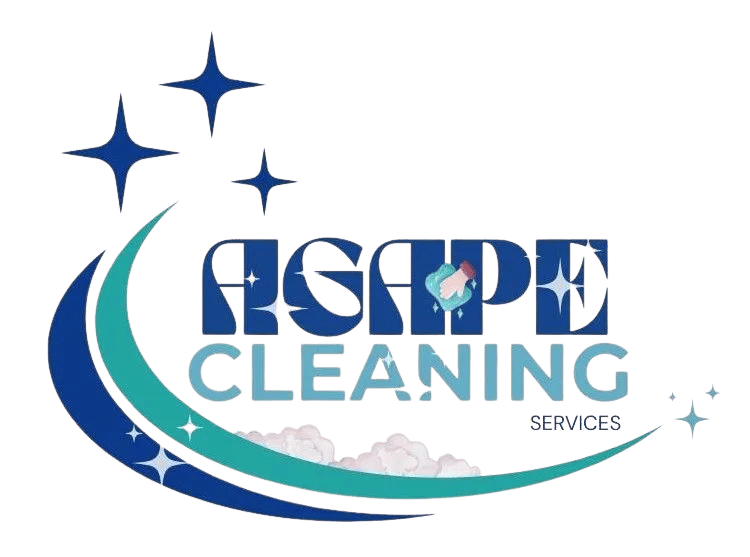
If you live anywhere in California’s Central Valley, the Inland Empire, or much of Southern California, you already know the look: that cloudy white film on glass shower doors, the crusty ring around the faucet, the spots on tile that won’t scrub off no matter how hard you try. Hard water stain removal cost in California typically runs $100 to $500 per professional visit, depending on the surface involved and how long the mineral buildup has been sitting there. DIY treatment, by comparison, usually costs $10 to $45 in supplies, but it only works on stains that haven’t progressed to actual etching.
At Agape Cleaning Services, we get asked about pricing on this almost every week, and the honest answer is always it depends, but it depends on specific, predictable things, not random guesswork. This guide breaks down exactly what drives the cost up or down, so you know what to expect before you ever pick up the phone.
Three factors decide almost every quote you’ll get:
Buildup is mineral deposits sitting on top of a surface. Etching is when those minerals have actually damaged the surface itself, usually glass. Buildup is a cleaning job. Etching is a restoration job, and the price difference between the two is significant.
Professional hard water stain removal in California costs $100–$500 per visit on average. Light buildup on a single shower door runs closer to $75–$150, while etched glass restoration or replacement can run $400–$1,200 depending on severity.
Surface | Typical Cost Range | Notes |
Glass shower door (buildup) | $75 – $150 | Most common service request |
Tile and grout | $150 – $300 | Priced partly by square footage |
Faucets and fixtures | $50 – $150 per fixture | Often bundled with bathroom cleaning |
Glass shower door (etching) | $200 – $400 | Requires polishing or restoration |
Whole-bathroom service | $250 – $600 | Combines multiple surfaces in one visit |
Square footage matters most for tile and grout jobs; a small powder room runs far less than a large primary bathroom with floor-to-ceiling tile.
This is the distinction that actually determines your final bill, and it’s worth understanding before you call anyone for a quote.
Severity Level | Description | Removal Method | Typical Cost |
Light film | Recent calcium and magnesium deposits | Acid-based cleaner, wipe down | $75 – $150 |
Moderate buildup | Crusty deposits, several months old | Descaling solution, soft wash technique | $150 – $300 |
Light etching | Faint permanent marks in glass | Professional polishing | $200 – $400 |
Severe etching | Deep, visible glass damage | Glass restoration or replacement | $500 – $1,200+ |
Key Takeaway: If a cleaning product hasn’t worked after two or three honest attempts, you’re very likely looking at etching rather than surface buildup, and no amount of scrubbing will change that.
Method | Cost | Works Well For | Doesn’t Work For |
White vinegar soak | $3 – $6 | Faucets, showerheads | Etched glass |
CLR or descaling product | $8 – $15 | Tile, grout, fixtures | Deep etching |
Pumice stone (wet only) | $6 – $12 | Toilet bowls, light glass haze | Large glass surfaces |
Glass restoration kit | $25 – $45 | Moderate film on glass | True etching |
Professional limescale removal service | $100 – $500 | Buildup and light-to-moderate etching | — |
Professional glass restoration | $200 – $1,200 | Etched or damaged glass | — |
A scenario we see often: a homeowner in Riverside tries vinegar and a magic eraser on a shower door for weeks, sees no real change, and finally calls us, only to learn the glass had etched a year earlier and needed professional polishing instead of more scrubbing. Catching it early saves both time and money.
A large share of California, especially inland regions like Riverside, San Bernardino, and parts of the Central Valley, has notably hard water, often measured at 10 to 20+ grains per gallon (GPG) according to local water hardness data. Anything above 7 GPG is generally considered hard, and much of inland Southern California sits well above that.
That means homes here build up calcium carbonate and magnesium deposits faster than homes in areas with naturally softer water, which is part of why this is one of the most requested services we handle as a professional cleaning service.
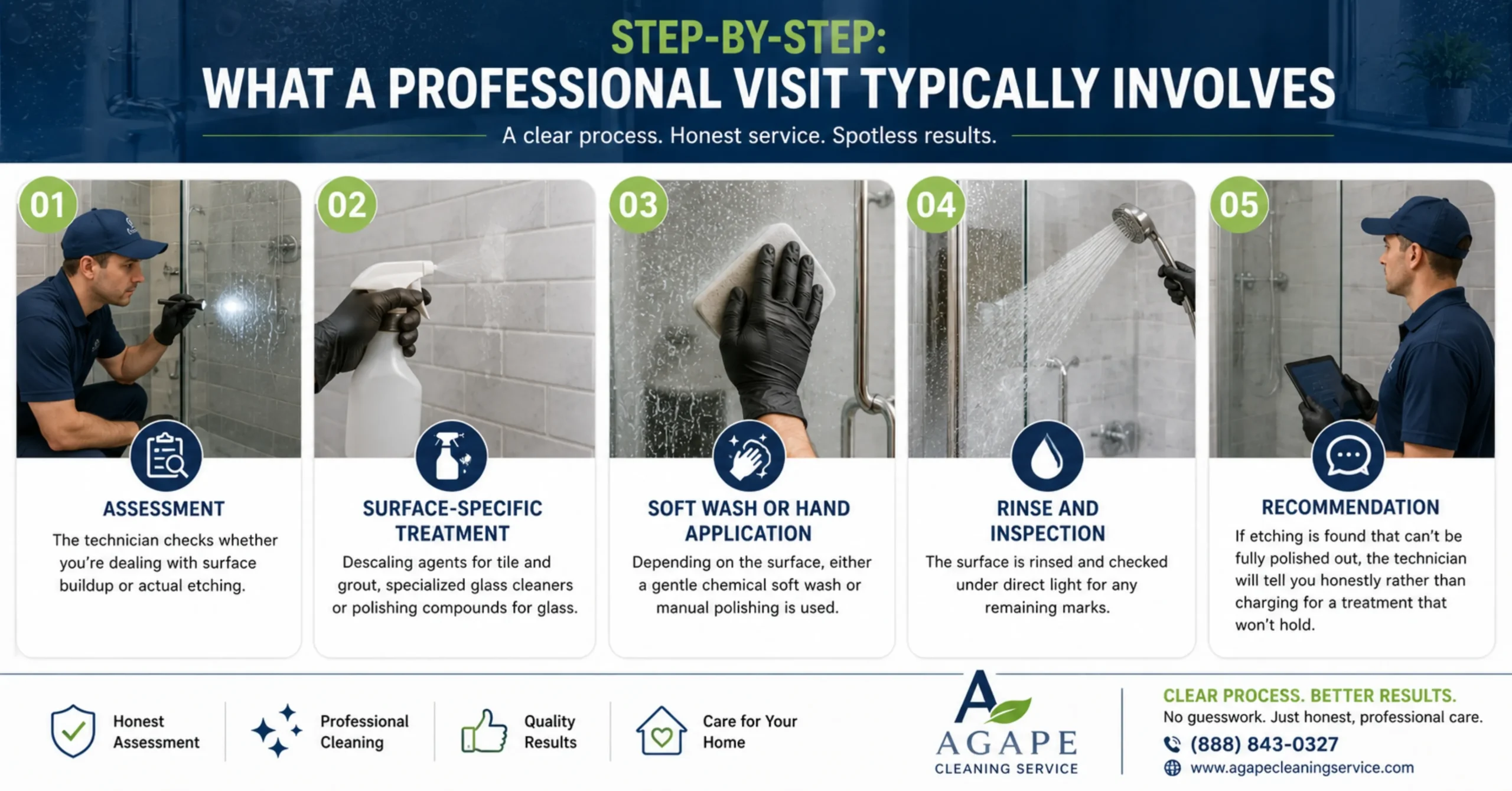
This is the part of the conversation most companies avoid because it’s not a great sales pitch, but it matters: once hard water has etched into glass, no cleaning product, DIY or professional, can fully reverse it. At that point you have two options: professional glass polishing, which can significantly improve (but not always fully eliminate) the appearance, or full glass replacement for severe cases.
Etched glass repair cost typically runs $200–$400 for polishing, while full shower door replacement can run well past $1,200 depending on size and glass type. Anyone offering a guaranteed full reversal of true etching for $100 should be approached carefully.
If you’re paying for hard water stain removal more than once a year, it’s worth running the numbers on a whole-house water softener. Installation typically costs $1,000 to $2,500, and it addresses the mineral content in your water directly rather than treating the symptoms repeatedly.
For a California household spending $300+ annually on stain removal, a softener often breaks even within three to five years and also protects water heaters, dishwashers, and washing machines from the same mineral buildup that affects your glass and tile.
Most California homeowners pay $100 to $500 per professional visit, depending on the surface and severity. Light buildup on a single shower door costs less, while etched glass restoration costs more.
Limescale removal cleans mineral deposits sitting on top of a surface and typically costs $75–$300. Glass etching repair addresses permanent damage beneath the surface and costs $200–$1,200 depending on severity.
Yes, for light buildup. Vinegar, CLR, and pumice stones cost between $3 and $45 and work well on recent deposits. If stains remain after a few attempts, the surface is likely etched and needs professional attention.
Tile and grout cleaning typically runs $150–$300, priced partly by square footage, since larger bathrooms require more time and materials.
For households spending $300 or more per year on stain removal, a water softener ($1,000–$2,500) often pays for itself within three to five years while also protecting plumbing and appliances.
Generally no. Hard water staining is considered a gradual maintenance issue, which most policies exclude. Check your specific policy to confirm.
If you’re dealing with stubborn hard water stains anywhere in California, Agape Cleaning Service can tell you honestly whether you’re looking at a quick clean or something that needs deeper restoration- no upsell, just a straight answer and a fair price. Contact Agape Cleaning Services today for a free assessment and transparent quote.